
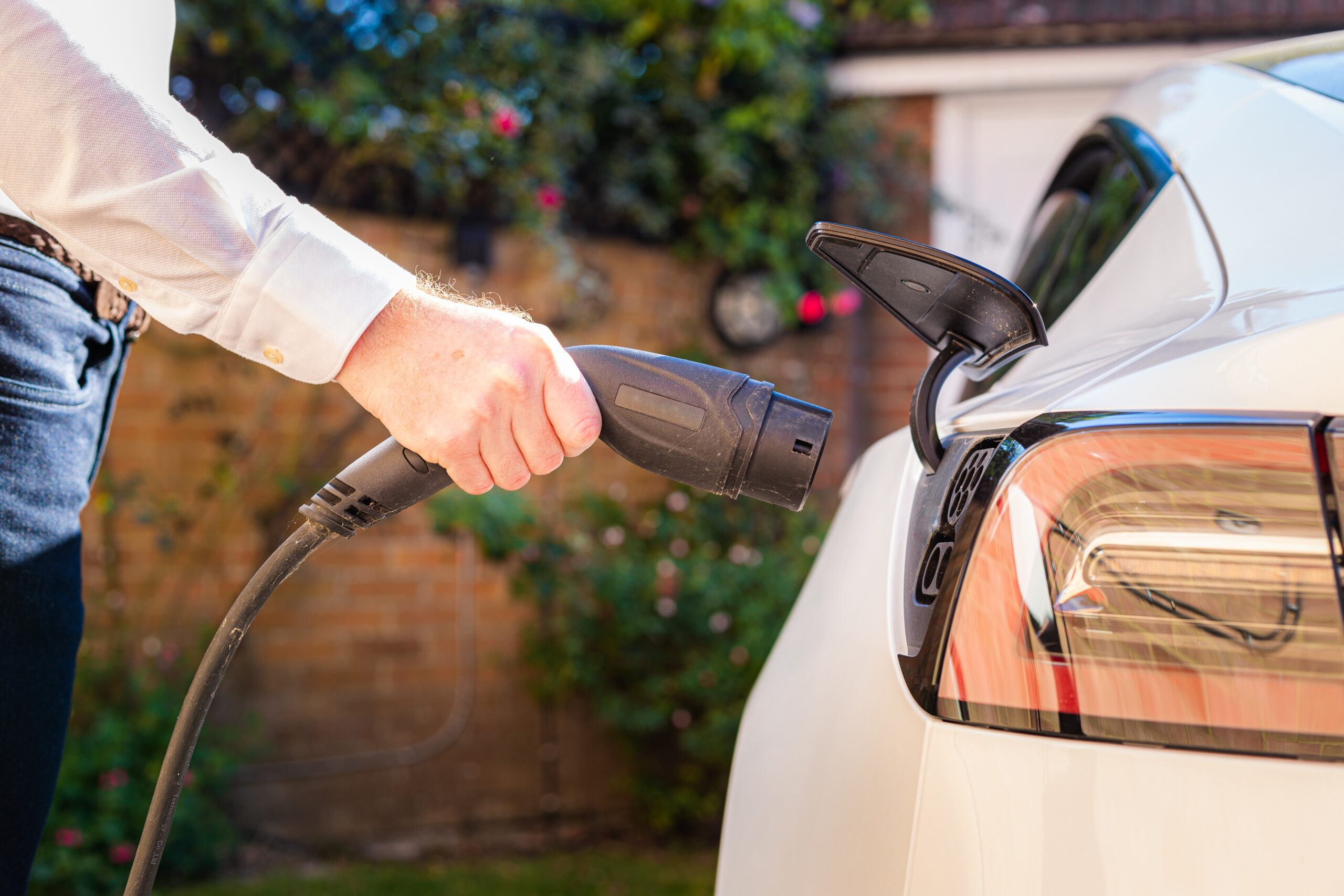
Washington drivers are adopting EVs faster than ever—and in 2026, a Level 2 home charger is the upgrade most households want after buying an electric vehicle. Public DC fast chargers are useful on road trips, but daily life is simpler when your car fills up overnight in the garage.
This guide walks through how to plan Level 2 EV charger installation in Washington State: electrical requirements, panel capacity, permits, realistic costs, incentives, and a clear next step to schedule a professional assessment.
Ready to plan your install? Schedule a free EV charger consultation with Farmers Electric—serving Greater Seattle including Seattle, Bellevue, Redmond, Kirkland, Bothell, Woodinville, Shoreline, Lynnwood, Everett, Renton, and nearby communities. See EV charger installation by city.
Level 1 vs Level 2 EV Charging (Why Level 2 Wins for Daily Use)
| Charger type | Power | Typical rate | Best for |
|---|---|---|---|
| Level 1 | 120V outlet | ~3–5 miles of range per hour | Occasional use, plug-in hybrids |
| Level 2 | 240V dedicated circuit | ~20–40+ miles of range per hour | Daily commuting, full EVs |
| DC fast charge | Public high-power stations | 100+ miles in a short stop | Road trips (not typical for homes) |
Most modern EVs support Level 2 charging. A properly sized Level 2 EV charger installation means you leave home with a full battery almost every morning—without relying on public queues.
What “Planning” a Level 2 Charger Really Involves
Buying the wall unit is the easy part. A solid plan covers five decisions:
- Where the charger will mount (garage, carport, exterior wall)
- How much power you need (amperage and continuous load)
- Whether your panel can handle the circuit (or needs an upgrade)
- Hardwired vs plug-in (NEMA 14-50) installation style
- Permits and inspection with your local Washington jurisdiction
Skipping load calculation or permits is how DIY projects fail inspection—or create fire risk. In Washington, licensed electricians (EL01 contractors) coordinate code-compliant work and inspections.
Electrical Requirements for a Home Level 2 Charger
Circuit and amperage
Most residential Level 2 stations use a dedicated 240-volt circuit. Common setups:
- 40-amp circuit (often 32A continuous EVSE rating) — popular for many daily drivers
- 48–60-amp circuit — higher-power wall connectors when the panel and wiring support it
- Multi-EV or shared-load systems — smart load management when two cars share limited capacity
Your vehicle’s on-board charger and the EVSE (electric vehicle supply equipment) both limit how fast you charge. Bigger isn’t always better if the panel can’t support it safely.
Hardwired vs NEMA 14-50 plug-in
- Hardwired Level 2 charger: Cleaner install, often preferred for permanent home stations and many manufacturer instructions.
- NEMA 14-50 receptacle: Flexible if you may relocate equipment later; still requires a dedicated circuit and proper outdoor-rated devices when used outside.
A licensed electrician will recommend the right approach for your wall unit, weather exposure, and local code.
Distance and wire path
Long runs from the panel to the parking spot increase material cost and may require larger conductors. Planning the route early (through garage walls, attic, or conduit) keeps the quote accurate.
Can Your Electrical Panel Handle a Level 2 EV Charger?
This is the most important planning question—and the one most often missed when people shop for hardware first.
An electrician evaluates:
- Main service size (100A, 150A, 200A, or larger)
- Available breaker spaces
- Existing continuous loads (HVAC, electric range, dryer, heat pump, hot tub)
- NEC load calculation for adding EVSE
- Age and condition of the panel (especially older fuse boxes or crowded 100A services)
Many Puget Sound homes on 100A service need a panel upgrade before a high-power Level 2 station. Homes already on 200A often have room for a properly designed circuit—after calculation, not guesswork.
Deep dive: Electrical panel capacity for Level 2 EV chargers
Permits and Code in Washington State (2026)
Washington follows the National Electrical Code (NEC) as adopted/amended by the state and local authorities having jurisdiction (AHJs). For homeowners this usually means:
- Electrical permit before work begins
- Installation by a licensed electrical contractor
- Inspection after install (and sometimes a rough-in if new circuits are concealed)
- Utility coordination when a service upgrade is required
Cities and counties (Seattle, Bellevue, Bothell, Snohomish County, King County, etc.) may have portal-specific permit processes. Your contractor should pull the permit and schedule inspection so the installation is legal, insurable, and resale-friendly.
Always use an EL01 licensed contractor for EVSE work. Farmers Electric is a Washington State EL01 licensed firm serving residential and commercial properties across the Puget Sound.
Level 2 EV Charger Installation Cost in Washington (2026 Ranges)
Costs vary by home. Use these planning ranges, not a fixed price:
| Scenario | Typical investment range* |
|---|---|
| Straightforward install (panel ready, short run) | Often lower end of project pricing |
| Medium complexity (longer conduit run, exterior mount) | Mid-range |
| Panel upgrade + charger circuit | Higher total—but future-proofs the home |
| Two-EV or load-managed system | Higher design and equipment cost |
*Equipment brand, amperage, wall type, trench/conduit length, and panel work drive the total. Get a written on-site estimate rather than relying on national averages.
What usually affects price:
- Panel upgrade or subpanel
- Distance from panel to charger
- Interior vs exterior mount and weatherproofing
- Trenching or complex routing
- Permit and inspection fees
- Brand (Tesla Wall Connector, ChargePoint, JuiceBox, universal units, etc.)
Rebates, Incentives, and Utility Programs in Washington
Incentives change frequently. In 2026, homeowners should check all three layers:
- Federal credits that may apply to residential EV charging equipment in eligible locations (rules and caps change—verify current IRS guidance)
- Washington utility programs (Seattle City Light, Puget Sound Energy, Snohomish County PUD, and others often promote EV readiness)
- Manufacturer or local promotions on equipment and installation
A good installer documents equipment model numbers and load details so rebate paperwork is easier. Farmers Electric can help you understand what typically qualifies before you buy the wrong charger.
2026 Planning Checklist for Washington Homeowners
Use this list before you purchase hardware:
- Confirm your EV’s on-board charger rate (kW) so you don’t overspend on unused capacity
- Choose the parking location and preferred wall
- Photograph your electrical panel (door open, labels visible) for a faster quote
- List major electric appliances (heat pump, range, dryer, hot tub, shop tools)
- Decide hardwired vs receptacle with your electrician
- Ask about permits and inspection included in the bid
- Confirm EL01 licensing and insurance
- Schedule a site visit before ordering equipment when possible
Why Work With Farmers Electric
Farmers Electric Design & Construction has served Puget Sound homes and businesses since 1956. For EV charger installation we provide:
- Licensed, insured electricians familiar with local AHJs
- Honest panel assessments—no pressure upgrades when capacity exists
- Clean installs for Tesla and major Level 2 brands
- Coordination of permits, inspections, and optional service upgrades
- Clear pricing after we see the site
Whether you’re in Seattle, Bellevue, Redmond, Bothell, Everett, or surrounding cities, we plan Level 2 charging around your panel, your vehicle, and Washington code—not a one-size-fits-all kit.
Schedule Your Level 2 EV Charger Planning Visit
The fastest way to a reliable install is a professional load assessment. We’ll tell you if you’re ready for a Level 2 circuit today—or if a panel upgrade should come first.
Schedule your free estimate or call 360-668-9540.
Prefer a campaign page? Visit our EV charger installation landing page for a quick overview and form.
Related reading: Level 2 EV charger cost in Washington 2026 · Tesla Wall Connector installation · Hardwired vs plug-in Level 2 · Dual EV charging at home · Commercial EV charging for buildings · Panel capacity check