
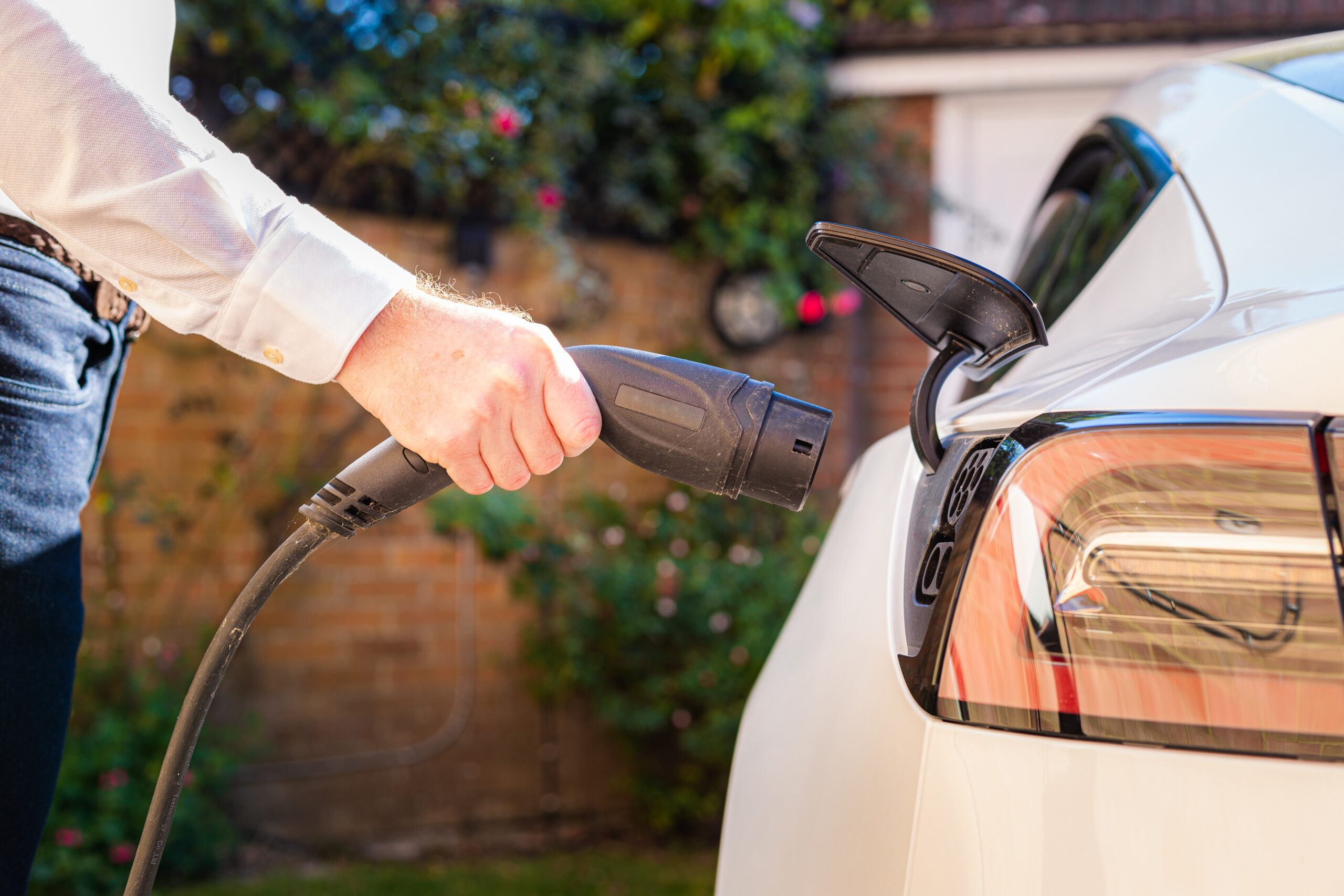
One of the first product decisions for home charging is hardwired vs plug-in Level 2 EV charger. Both can work well. The better choice depends on permanence, location, equipment instructions, and how your panel is designed.
Here’s a clear comparison for Washington homeowners planning a 2026 install.
Not sure which path fits your garage? Schedule a free consultation and we’ll recommend a code-compliant setup.
Quick Comparison
| Factor | Hardwired Level 2 | Plug-in (often NEMA 14-50) |
|---|---|---|
| Connection | Dedicated circuit to EVSE | Dedicated circuit to receptacle; charger plugs in |
| Look | Clean, permanent | More flexible / movable |
| Common use | Permanent home wall connectors | Flexibility, some portable EVSE |
| Outdoor | Excellent when listed equipment used | Needs outdoor-rated receptacle/in-use cover |
| Typical preference | Many fixed wall units | Users who may relocate equipment |
What “Plug-In Level 2” Usually Means
In homes, plug-in Level 2 often means a NEMA 14-50 receptacle on a dedicated 240V circuit. You then use:
- A portable EVSE with a 14-50 connector, or
- A wall unit designed for receptacle connection (model-specific)
Important: the receptacle still requires professional wiring, correct breaker sizing, and often a permit. “Plug-in” does not mean “use any dryer outlet as-is.”
Advantages of Hardwired Level 2
- Matches many manufacturer installation manuals for fixed wall connectors
- No receptacle contacts to maintain under continuous EV loads
- Cleaner cable management on the wall
- Often preferred for long-term home installs (including many Tesla Wall Connector projects)
If you plan to keep the charger at this house for years, hardwired is frequently the best default. See also Tesla Wall Connector installation in Washington.
Advantages of a Plug-In (NEMA 14-50) Setup
- Easier to swap certain portable EVSE brands later
- Useful if you may move and take a portable unit
- Can support a known, dedicated high-power receptacle when correctly installed
Tradeoffs include more exposed cord/plug interface and the need for a properly rated outdoor configuration if used outside.
Safety and Code Considerations
Regardless of hardwired vs plug-in:
- Use a dedicated circuit—do not share with other loads
- Size conductors and breakers for continuous EV load rules
- Follow the EVSE listing and installation instructions
- Pull a Washington electrical permit and pass inspection
- Hire an EL01 licensed contractor
Older “dryer outlets” are not automatically acceptable for modern EV charging duty. Have an electrician evaluate the circuit before trusting it with overnight charging.
Cost Differences
- Hardwired: equipment + circuit + labor; no receptacle
- Plug-in: equipment + circuit + receptacle (and in-use cover outdoors) + labor
Price difference is often smaller than people expect—the wire path and panel capacity dominate cost either way. For numbers context, read Level 2 EV charger cost in Washington 2026.
Which Should You Choose?
Choose hardwired if you:
- Want a permanent wall connector
- Prefer a clean install
- Own a Tesla Wall Connector or similar fixed unit
- Are building long-term EV readiness into the home
Consider plug-in if you:
- Use portable EVSE and may relocate
- Need temporary flexibility at a rental (with landlord/permit rules)
- Specifically want a NEMA 14-50 for multi-use planning (with correct design)
When in doubt, design for the safer permanent solution that matches your vehicle and panel.
Multi-EV Homes
Two cars can mean:
- Two hardwired units with power sharing
- One hardwired + one lower-rate option
- Smart load management instead of two maxed-out circuits
Panel capacity drives the design more than plug style. Start with a capacity check.
Schedule a Recommendation Visit
Farmers Electric installs hardwired Level 2 stations and properly designed receptacle circuits across the Puget Sound—always sized to your panel and local code.
Schedule your free estimate · Call 360-668-9540 · EV charger installation
Related: Washington Level 2 planning guide · Commercial EV charging for buildings