
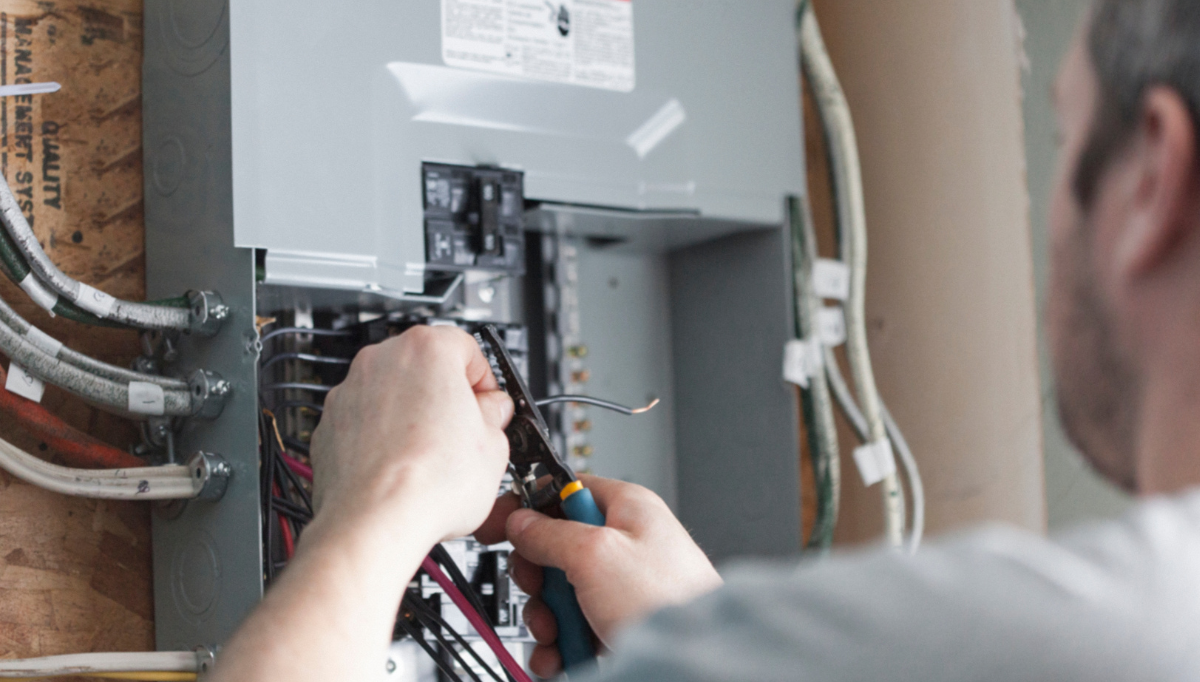
Before you buy a wall connector, answer one question: can your electrical panel handle a Level 2 EV charger?
Many Washington homes—especially older 100-amp services—cannot safely support a high-power Level 2 circuit without an upgrade. Others on 200-amp service can, after a proper load calculation. This guide explains how electricians evaluate capacity so you can plan with confidence.
Want a definitive answer for your home? Schedule a panel and EV charger assessment with Farmers Electric.
Why Panel Capacity Matters for Level 2 Charging
A Level 2 EV charger is not a small appliance. It is a continuous electrical load on a dedicated 240-volt circuit—often 32 to 48 amps of continuous draw (and higher for some systems).
If the main service or panel is already near its limit, adding EV charging can:
- Trip the main breaker
- Overheat undersized equipment
- Fail electrical inspection
- Create a fire hazard under sustained load
A capacity check protects your home and keeps the installation code-compliant under the NEC rules adopted in Washington.
Quick Signs Your Panel May Need Attention
You may need a deeper evaluation (or panel upgrade) if you notice:
- A 100-amp main breaker on an older home
- A panel that is full (no free breaker spaces)
- Frequent breaker trips when multiple large appliances run
- Double-tapped breakers or unlabeled circuits
- Plans for two EVs, a heat pump, or a hot tub in addition to charging
- An old fuse box or outdated panel brand/style
None of these automatically block Level 2 charging—but they are red flags that planning should start with an electrician, not an online cart.
100A vs 150A vs 200A Service: What Homeowners Should Know
| Service size | Typical EV planning note |
|---|---|
| 100A | Often tight for high-power Level 2; many homes need a service upgrade first |
| 150A | Case-by-case; load calculation decides |
| 200A | Common modern target; often supports EVSE when spaces and calc allow |
| 200A+ / dual EV | May need load management or careful design |
Important: Service size alone is not a green light. A 200A panel packed with electric heat, range, dryer, and spa equipment may still need smart design—or a different charger amperage.
How Electricians Check Capacity (Load Calculation Basics)
A professional assessment usually includes:
- Service and panel rating (main breaker size, bus rating)
- Inventory of major loads (HVAC, kitchen, laundry, water heat, shop, spa)
- NEC load calculation methods appropriate for the dwelling
- EVSE continuous load rules (EV chargers are treated as continuous loads)
- Feeder and conductor sizing for the chosen amperage
- Physical space for a new 2-pole breaker or subpanel
This is why photos of your panel help for a preliminary conversation—but a site visit is the gold standard before ordering equipment.
Options If Your Panel Is at Capacity
1. Right-size the charger circuit
Sometimes a 40-amp circuit meets daily range needs without the highest-power wall setting. Match the circuit to your commute, not marketing max rates.
2. Load management / power sharing
Smart EVSE systems can share capacity between two vehicles or throttle charge rate when the home is under heavy load. Useful for multi-EV households.
3. Subpanel
When the main has space issues but service capacity exists, a subpanel near the garage can simplify wiring.
4. Main service / panel upgrade
A new electrical panel or full service upgrade is the long-term fix for 100A homes adding EV charging, heat pumps, and modern loads. It often increases resale appeal and inspection readiness.
Farmers Electric designs the sequence so you are not stuck with a charger you cannot energize.
Washington Homes: Local Planning Notes
In the Puget Sound region we frequently see:
- Mid-century homes on 100A services adding their first EV
- Newer builds with 200A panels and heat pumps competing for capacity
- Detached garages needing long conduit runs from the house panel
- Exterior installs requiring weather-rated equipment and clearances
Permits and inspections apply whether the job is “just a circuit” or a full service upgrade. Work with an EL01 licensed contractor so the installation is accepted by your city or county inspector.
Cost Planning: Charger Only vs Panel + Charger
Budget in two buckets:
- EVSE installation — circuit, wiring, mount, permit for the charger path
- Service / panel work — if required for capacity or breaker spaces
Combining both in one project is often more efficient than two separate mobilizations. Ask for a line-item estimate so you can phase work if needed.
Checklist: Before You Buy a Level 2 Charger
- Note your main breaker size (look at the large breaker in the panel)
- Count free breaker spaces
- List large electric appliances
- Measure approximate distance from panel to parking spot
- Decide indoor vs outdoor mounting
- Confirm vehicle on-board charger rate (kW)
- Book a professional assessment
Schedule a Capacity Check With Farmers Electric
Guessing panel capacity is expensive. A short site visit tells you:
- Whether you’re ready for Level 2 now
- What amperage is realistic
- Whether a panel upgrade should come first
- A clear path to a permitted, inspected install
Schedule your free estimate or call 360-668-9540.
Learn more about our EV charger installation services or start on our EV charger landing page.
Related reading: Level 2 EV charger installation in Washington — 2026 planning guide · Level 2 cost breakdown · Dual EV power sharing · Commercial building EV charging · Electrical panel services